Last Seen
Ten characters for a real-world hide and seek game, animated in Rive. Every one on this page is live. Tap them.
01 Tap any of them
All ten characters, all fifty animations, running live from the same Rive files the game loads. Switch the version. Tap a character to see its reaction.
Ten characters in five versions each, driven by one state machine,
main.
02 They used to stand still
In Last Seen Mugshot, friends play hide and seek in real places, and your character is your pin on the map. When I joined, all ten were flat shapes drawn in code, with the same eyes and no motion. I rebuilt every one in Rive.
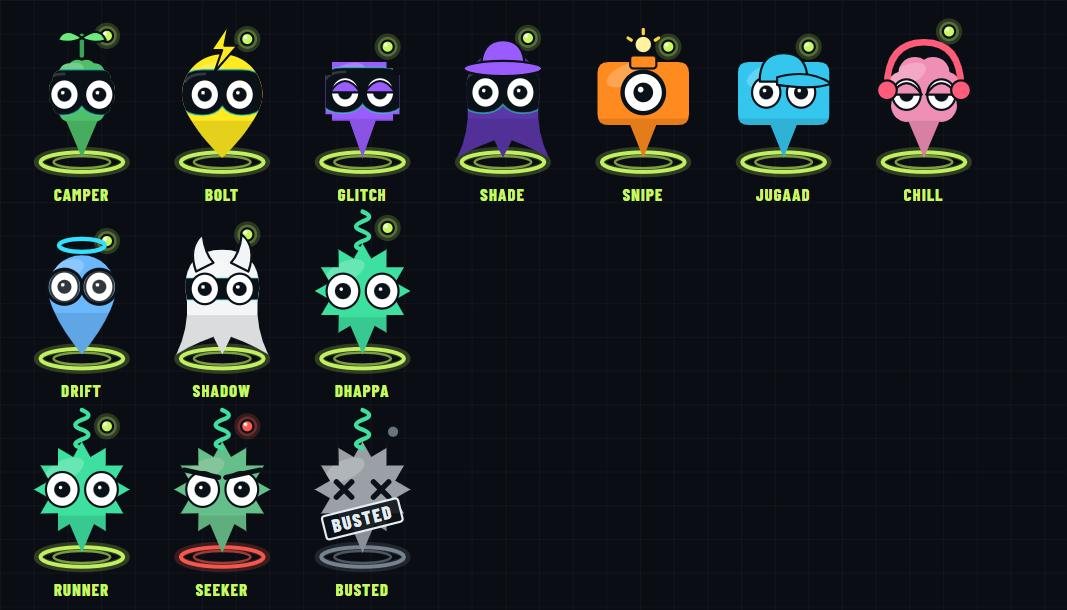
Flat, identical eyes, one lime ring for everyone.
Live. Tap one.
03 One set of moves, ten personalities
I built the motion once, on Camper: a hop every 3.6 seconds, a breath, a look around, a blink and a tap jump. All ten share it. Between hops, each does its own thing, and every effect comes from what the character is made of: Camper sheds leaves, Bolt throws sparks, Glitch breaks into pixels.
| Character | Between hops | When you tap it |
|---|
04 Caught, then angry
A runner gets caught, goes grey with X eyes, and a minute later comes back as a seeker hunting its old friends. These are the moments players remember, so the busted version falls apart in its own material and the seeker's effects turn angry. Pick a character and follow it through a round.
Hiding, in its own colour.
Grey, X eyes, a 60 second stun.
Coral ring, anger mark.
Camper through one round. Tap any stage.
05 No arms, no legs, so the body does the acting
Each character is a living map pin: the point is where you stand. With no limbs, all the expression comes from squash and stretch, the eyes and the thing on its head.
- TopperLags a beat behindSo every hop and tap has follow-through.
- EyesCarry the moodThey look around, squint, blink, and snap to you on a tap.
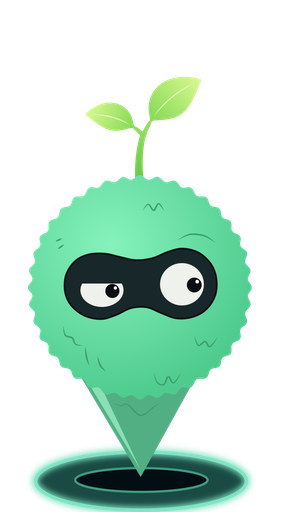
- Pin tipThe pivot for every moveThe character squashes and turns around the spot you stand on.
- RingNever hopsIt pulses on every landing, and its colour tells you the role.
06 Alive at 120 pixels, readable at 26
The same character sits next to a chat message and fills the home screen. I checked every drawing at the smallest size first. Playtesting set three motion rules: no animation on the live map, nothing flashes more than three times a second, and every loop ends on the pose it started from.
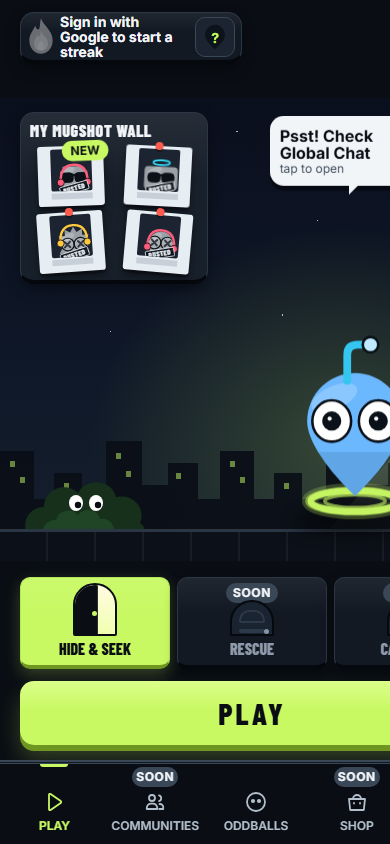
Camper, live at every size the game uses. Right: the home screen, still with the old flat character.
07 The game sends a tap. The character does the rest
Every artboard has the same part names, state machine and inputs, so the developer drives all ten the same way.
The game sends
tapThe player tapped the characterblinkAt random, so they never blink in syncmood, lookX, lookYReserved; for now each mood is its own artboard
Layers in main
Layer 1Hop, quirk and tap jumpbreatheA slow squash under everythinglookEyes left and right, with small dartsblinkOne blink per triggerfxThe character's own material, looping
Parts it moves
root, characterBoth pivot at the pin tiptopper, face, bodyWhole shapes, so nothing opens a gap mid-moveringOutside the rig, so it stays put
Each property is animated on one layer only, so two animations never fight over the same eye.
08 What I would do differently
I would draw by hand from day one. Tracing the references automatically gave wobbly edges; hand-placed points, mirrored left to right, gave clean ones.
I would also set a file size budget before adding effects. The brief asked for about 60 KB a character, and most files ended up bigger because I chose quality first.